As the US Turns 250, a BBC Survey Captures a World Split Between Admiration and Unease
A new BBC feature gathering views from Brazil, India, Egypt and beyond finds global opinion of the United States marked by both fascination and deep ambivalence as the country nears its semiquincentennial.

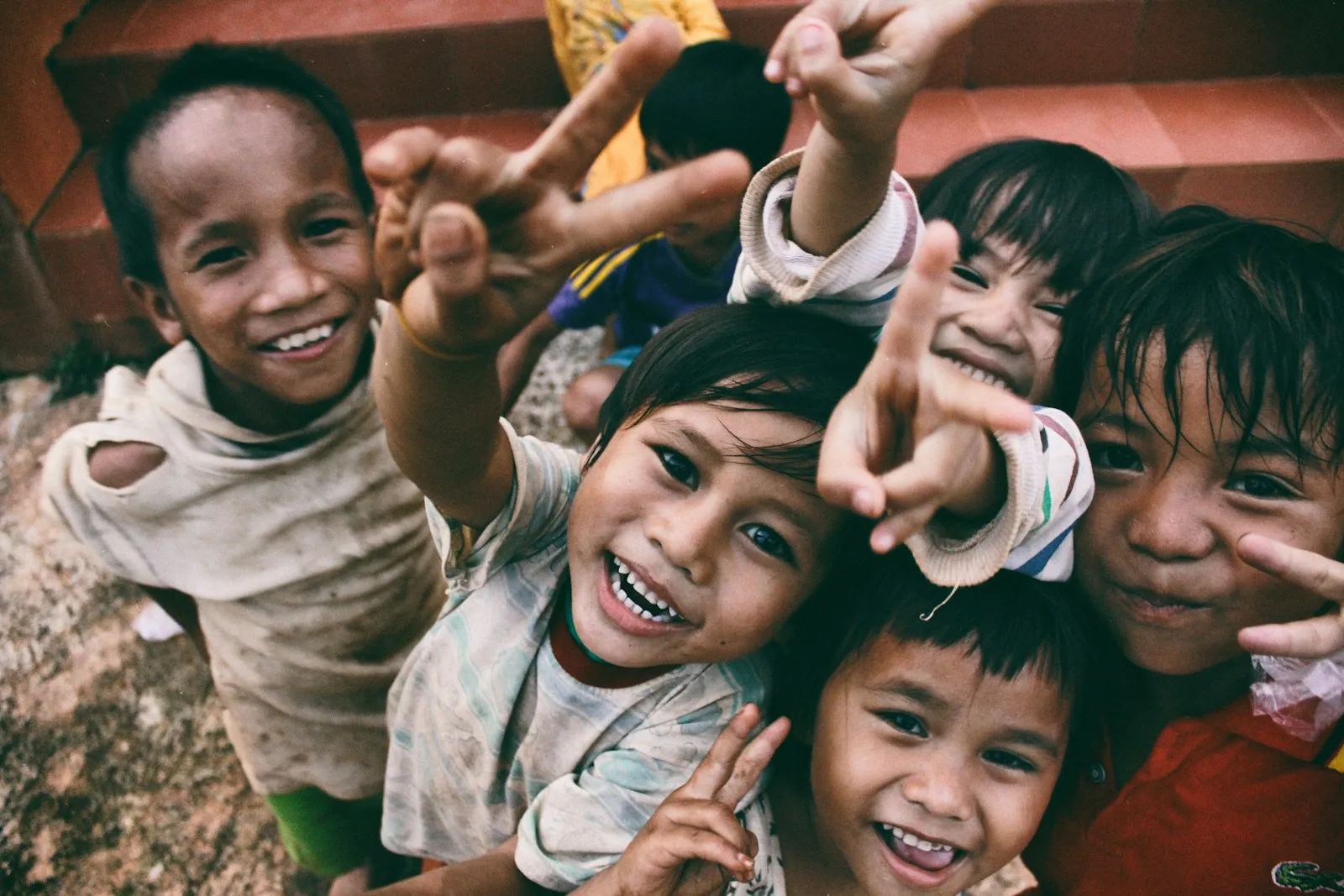
A Milestone Prompts Reflection Abroad
As the United States approaches the 250th anniversary of its founding, the British Broadcasting Corporation has turned its attention not to Washington but to the rest of the world, asking ordinary people across several continents how they view the country at this milestone. The resulting video feature, produced by the BBC, gathered impressions from respondents in Brazil, India, Egypt and other nations, offering a mosaic of perspectives rather than a single verdict.
The project arrives at a moment when the United States’ global standing is a subject of persistent debate among diplomats, academics and everyday citizens alike. Rather than rely on polling firms or think-tank analysts, the broadcaster opted for a more personal approach, letting individuals describe in their own words what America represents to them. The format underscores a broader journalistic trend of using first-person, cross-border vox-pop segments to capture sentiment that traditional surveys can struggle to convey.
That editorial choice is itself worth dwelling on. A polling instrument might ask respondents to rate the United States on a numeric scale of favorability, producing a tidy headline figure but stripping away the texture of why someone holds a particular view. By contrast, letting individuals speak in their own words — with all the hedges, contradictions and asides that entails — forces the audience to sit with ambiguity rather than resolve it into a single number. That ambiguity, as it turns out, is closer to how most people actually think about a country as large, varied and consequential as the United States.
A Nation Seen in Contradictions
What emerges from the BBC’s reporting is less a coherent narrative than a patchwork of contrasts. Descriptions offered by participants reportedly ranged from admiration for American culture, innovation and opportunity to unease about its foreign policy, social divisions and global influence. That duality is hardly new in international perceptions of the United States, but the timing — coinciding with the run-up to the country’s 250th birthday — gives it added resonance.
The coexistence of admiration and unease within the same set of impressions is, in many ways, the through-line of the entire feature. It is not that some respondents love America and others distrust it; rather, the same individuals appear capable of holding both reactions simultaneously. Someone might point to American film, music or entrepreneurial culture as sources of genuine inspiration, while in nearly the same breath expressing discomfort with the country’s conduct abroad or its internal political polarization. That layering complicates any effort to reduce the findings to a simple positive-or-negative ledger, and it is precisely the kind of nuance that a scripted diplomatic statement or a single-number opinion poll would tend to flatten out.
Countries selected for the feature span different regions and relationships with Washington. Brazil, a major Latin American economy with a complex and at times fraught diplomatic history with the US, offers one vantage point. India, an increasingly influential power in South Asia with deepening strategic ties to Washington, offers another. Egypt, a longtime recipient of American aid and a key player in Middle Eastern diplomacy, provides yet another lens. Together, these locations suggest an attempt to represent a broad swath of the globe rather than any single bloc or alliance.
The choice of these three countries in particular is instructive. Each occupies a distinct position relative to American power — one a regional economic heavyweight with a history of friction and cooperation in equal measure, one a rising strategic partner whose relationship with Washington has grown steadily closer in recent years, and one a longstanding aid recipient whose ties to the United States are woven into decades of regional diplomacy. That spread means the feature is not simply canvassing allies or simply canvassing skeptics; it is deliberately sampling across the spectrum of how nations relate to American power, from close partnership to more transactional or historically complicated engagement.
Why Global Perception Matters Now
Public sentiment abroad has long been treated by scholars of international relations as a component of what is often termed a nation’s soft power — the ability to shape outcomes through attraction and persuasion rather than coercion. How ordinary citizens in other countries view the United States can shape everything from tourism and trade to the reception of American diplomacy and cultural exports. A milestone anniversary, even one rooted in domestic history, naturally invites outside observers to take stock of what the country has come to symbolize on the world stage.
This matters beyond the realm of abstract reputation. Soft power, as it is conventionally understood, does not operate independently of the harder instruments of foreign policy — it conditions how those instruments are received. A trade negotiation, a security partnership or a cultural exchange program can proceed more smoothly, or meet more resistance, depending on the baseline goodwill or skepticism that already exists among a foreign public. In that sense, a project like the BBC’s, however impressionistic, touches on something with real practical stakes: the accumulated sentiment that shapes how receptive a population is to American engagement, long before any specific policy is ever debated.
The framing chosen by the broadcaster — capturing candid, unscripted reactions rather than official statements — reflects an editorial choice increasingly common in international coverage of major anniversaries. It allows for a range of voices, including those who may feel warmly toward American cultural touchstones while simultaneously harboring criticism of specific policies or historical episodes. Such nuance can be difficult to convey through traditional polling, which often reduces sentiment to simple favorable-unfavorable metrics.
It is also a format that travels well across linguistic and cultural boundaries. Where a formal survey instrument must be carefully translated and validated to ensure equivalent meaning across languages, a personal anecdote or observation tends to carry its own context with it. A respondent’s reference to a Hollywood film, a Silicon Valley company or a specific episode of American foreign policy can communicate a great deal about the underlying sentiment without requiring the same methodological scaffolding that a rigorous cross-national survey would demand.
A Reflection of Broader Global Currents
The exercise also arrives against a backdrop of shifting international dynamics, in which multiple countries are recalibrating their relationships with Washington amid changing trade patterns, security arrangements and technological competition. Against that backdrop, a project asking everyday people — rather than officials — for their impressions offers a grassroots counterpoint to the more formal diplomatic assessments that typically accompany discussions of American influence.
That counterpoint is significant precisely because official diplomatic language tends to smooth over the very ambivalence that ordinary citizens are often willing to voice openly. Government communiqués and joint statements are crafted to project stability and continuity in bilateral relationships, even when public sentiment on the ground is shifting or contested. A feature built around individual voices, by contrast, has no such obligation to project consistency. It can capture a Brazilian respondent’s admiration for American technology alongside an Indian respondent’s ambivalence about immigration policy, or an Egyptian respondent’s gratitude for past assistance alongside broader regional frustrations — without needing to reconcile those views into a single official position.
It is worth noting that vox-pop journalism of this kind, while valuable for capturing texture and lived experience, is not intended to serve as a scientific measure of public opinion. The individuals featured cannot be assumed to represent their countries’ populations as a whole, and the selection of participants and locations reflects editorial choices as much as demographic representativeness. Still, such reporting can illuminate broader themes that more rigid survey instruments sometimes miss, including the emotional and cultural dimensions of how a country is perceived abroad.
That limitation is not a flaw so much as a tradeoff inherent to the format. Where a nationally representative survey sacrifices individual nuance for statistical generalizability, a curated set of personal accounts sacrifices generalizability for depth and specificity. Readers and viewers are left to weigh the feature not as a definitive gauge of Brazilian, Indian or Egyptian public opinion, but as a set of illustrative case studies — data points that suggest broader currents without claiming to measure them precisely. That distinction matters for how the reporting should be interpreted, even as it does nothing to diminish the value of what the individual accounts reveal.
Looking Ahead to the Anniversary
As the United States moves closer to marking two hundred fifty years since its founding, coverage examining how the country is seen beyond its own borders is likely to continue. Anniversaries of this scale often prompt both celebratory retrospectives within the country and more critical external assessments, and the tension between those two modes of reflection is itself a recurring feature of how nations mark major historical milestones.
That tension is likely to sharpen rather than fade as the anniversary date itself approaches. Domestic commemorations tend to emphasize founding ideals, national achievement and continuity of purpose, while external observers — freed from the obligations of national self-celebration — are often more inclined to weigh those ideals against the country’s actual conduct on the world stage. Neither vantage point is more authoritative than the other; they simply serve different purposes, one oriented toward affirming a shared national story and the other toward testing that story against outside experience.
For now, the BBC’s collection of global voices stands as a snapshot rather than a definitive judgment — a reminder that perceptions of any major power are rarely uniform, and that admiration and criticism can coexist within the same set of impressions, sometimes even within the same individual’s account. As the anniversary draws nearer, further reporting from domestic and international outlets alike is expected to add additional layers to that still-forming picture, layering fresh voices and vantage points onto a portrait of American standing abroad that, if this feature is any indication, will likely remain as contradictory and unresolved as the country itself.

Amara has reported from three continents over fifteen years, covering elections, conflict and the institutions that hold the world together. She joined Meridian to cover the seams where geopolitics meets ordinary life. Previously a bureau chief in Nairobi and Brussels.
Sources
The Arctic's New Shipping Lane Is Redrawing the Map of Trade
A passage that was solid ice within living memory is now navigable for much of the year, and the routes it opens are quietly rearranging the geopolitics of trade.

Bieber Joins Madonna, Shakira and BTS for World Cup Final Halftime Show
FIFA has assembled a cross-generational, multi-genre lineup for a Super Bowl-style halftime spectacle at the World Cup final, with Justin Bieber the latest name added to the bill.
Canadian Boy, 11, Dies of Rabies After Bat Encounter in His Sleep
A rare rabies death in Canada, linked to a nighttime bat encounter, is drawing fresh attention to the disease's near-total lethality once symptoms begin and to gaps in public awareness about bat exposure.
The Meridian Dispatch
One email, twice a week. The stories that crossed the line — from the news desk and the style desk both. No noise, no algorithm.